
Why Watch Collectors Are Choosing Micro Brands Over Big Names

Picture a dinner table anywhere in the world. Someone glances at the watch on the wrist next to them and says nothing. Expensive. Recognisable. Nothing wrong with it.
Now picture a different watch at the same table. Someone looks, pauses, and says, sorry, what is that?
That second moment is what serious collectors everywhere are increasingly chasing, and it is a shift no famous name can reliably produce anymore.
The Question That Changed Everything
For most of the last century, buying a watch was simple. You bought the name you could afford. The name carried the weight. The system worked because information was scarce, you trusted the brand because you had no other way to evaluate what was inside.
That system started breaking the moment anyone with an internet connection could spend an afternoon learning the difference between movements, understanding beat rates, comparing case materials and finishing standards across price points. Once the gap between what a brand claims and what is actually inside becomes visible, it cannot be unseen, and that gap is now visible to collectors in every major watch market, from Tokyo to Toronto to Bangalore.
The question collectors started asking, quietly at first, then loudly, was simple: am I paying for the watch, or for the name on it?
The most dangerous buyer for any brand selling prestige over product is an educated one. The watch market now has millions of them, on every continent.
What Actually Goes Into a Watch
Here is something most people do not know about the watch they are wearing right now.
The movement inside it was most likely sourced from one of a handful of specialist manufacturers who supply the global industry. Nearly 90 percent of watch brands work this way, and there is nothing wrong with that. The same movement calibre can sit inside a watch that costs a few hundred dollars and one that costs several thousand. The difference is not the engine. It is everything built around it.
That is where four things start to matter more than the name on the dial.
The movement choice is the first. Which calibre was selected and why? A movement that beats at 28,800 vibrations per hour produces a seconds hand that glides rather than ticks. A movement at 3.9mm thickness enables a slimmer case profile that sits differently on the wrist. These decisions have real consequences for the wearing experience.
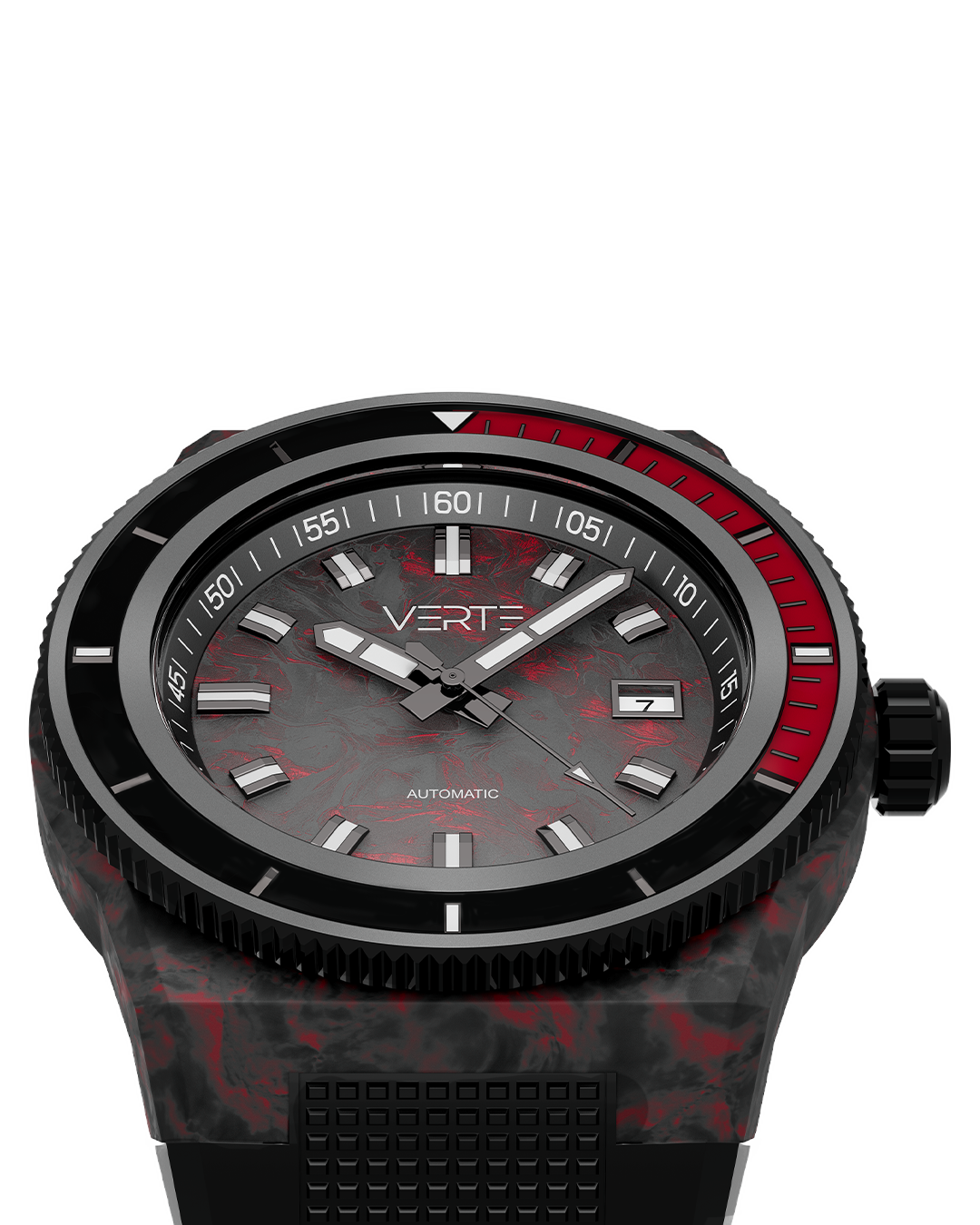
The case material is the second. Steel is the proven choice trusted by watchmakers for over a century. Titanium trades cost for a lighter wrist feel. Carbon fibre trades familiarity for something genuinely different, lighter than steel, with a natural weave pattern that forms uniquely during manufacturing so every piece looks different from every other. None of these is automatically superior. What matters is whether the choice was deliberate.
The design is the third. Proportions, dial layout, hand design, the relationship between case size and lug-to-lug length. These are active decisions or borrowed templates unchanged for sixty years. A collector who looks closely can tell the difference immediately.
The finishing is the fourth and the most honest signal of all. A case can be polished by almost anyone. What separates a considered watch from an average one is the detail work no product photo will ever capture: the bevelled edge, the consistent brushing across every lug, the aligned text on the dial under magnification. Finishing is invisible until you hold the watch. Then it is obvious.
A genuinely well-made watch is the sum of all four. None of it requires a famous name. It requires a brand that takes every decision seriously.
Once you understand what is actually inside a watch, the logo on the dial becomes only one factor in the decision. And often not the most interesting one.
What Collectors Are Actually Saying
The shift from name-buying to decision-buying shows up clearly in how collectors talk online. One comment from the watch community sums it up better than any brand narrative could.
I think the lines between corporate, independent and microbrands are pretty much well known. Anything part of a group, regardless if they produce their own movement or not, is a corporate production. Anything not part of a group and using their own in-house movements is independent. Anything that relies on off-the-shelf movements, whether they regulate them in-house or not, is more of a microbrand. At least that's how I see it after years of interest, research and collecting watches.
u/THe_SPoOoKs on r/MicrobrandWatches
This is what a collector sounds like after years of doing the actual work. No brand loyalty. No inherited opinions. Just a clear-eyed framework built from research and lived experience. The collector community is full of people who think exactly this way, and they are the ones deciding which micro brands deserve their attention.
The Dinner Table Test
The watch that makes someone pause and ask what it is, is almost never the obvious choice. Familiarity produces recognition, not curiosity. And curiosity is what leads to an actual conversation, what the watch is made of, why it exists, who built it.
The brands earning that question are the ones making decisions that cannot be explained by heritage alone. They are smaller, less familiar, harder to find, and increasingly coming from places the traditional watch world never expected. For a generation of collectors who have learned to look closer, that is exactly the point.
The question is simple. Are you buying the watch, or the name on it?